build 6ddc7a35 | content blog-content@417154f · 338 posts | profiles 32 · corpus 315 | ● 0 skipped | format run

$ soultec get service/it-strategie -o yaml$ soultec get service/it-strategie -o json$ soultec get service/it-strategie -o toml$ soultec get service/it-strategie -o xml$ python3 it-strategie.pyPS> ./it-strategie.ps1$ go run it-strategie.go$ node it-strategie.js

apiVersion: soultec.ch/v1kind: Servicemetadata: name: it-strategie locale: en labels: group: consulting capability/strategy: 2.87 capability/architecture: 2.51 annotations: source: src/content/services/en/it-strategie.md route: /en/services/it-strategie/ schema: /nerd/schema/services.json markdown: /en/services/it-strategie.mdspec: title: IT Strategy group: consulting audience: [enterprise, provider] order: 4 tags: [strategy, architecture] summary: >- How users want to consume a service, and how fast the business has to deliver, shape what the IT department needs to look like. photo: presenting photoNeed: "A strategy session: someone presenting to a room, slide visible" stub: false draft: false sections: - heading:

Why this is not a technology question

body: | How people want to consume a service today, and the speed at which departments need to get to market, feed straight back into how the IT department is staffed and organised. A strategy that only describes technology answers half the question. - heading:

What we work out together

body: | The future operating model: who delivers what, what gets bought in, which capabilities have to exist internally and which do not. That is the decision the architecture follows from, rather than the other way round. The questions it answers are always the same six: - Which tasks should IT take on? - How does the innovation process run with the business units? - Which services are provided in house and which are bought in? - Which work do you do yourselves, and where do you work with partners? - How should the IT department be set up in future? - Which skills does it take to do the new work? The last question decides about jobs and is often left out of strategy papers. - heading:

How it runs

body: | In workshops with you and your team. We do not write the strategy from outside, because we need to know your processes and responsibilities to write it at all. Two decisions always come up: whether IT runs the infrastructure itself or buys it as a service, and where a service is delivered. Both answers affect the roles and the development of the people, and we plan for that.status: corpus: 315 solutions: - {ref: solutions/hpe/hpe-server, score: 0.41} - {ref: solutions/hpe/hpe-server/hpe-synergy, score: 0.41} - {ref: solutions/ibm, score: 0.41} - {ref: solutions/ibm/ibm-power10, score: 0.41} alsoLike: - {ref: services/enterprise-architecture, score: 1.00} - {ref: services/requirements-engineering, score: 1.00} - {ref: posts/vmware-license-changes-2025, score: 0.52} experts: - {ref: experts/aldo-gwerder, score: 0.36} - {ref: experts/steven-rodenburg, score: 0.34} - {ref: experts/fabian-faessler, score: 0.33} search: /en/search.json
{ "apiVersion": "soultec.ch/v1", "kind": "Service", "metadata": { "name": "it-strategie", "locale": "en", "labels": { "group": "consulting", "capability/strategy": 2.87, "capability/architecture": 2.51 }, "annotations": { "source": "src/content/services/en/it-strategie.md", "route": "/en/services/it-strategie/", "schema": "/nerd/schema/services.json", "markdown": "/en/services/it-strategie.md" } }, "spec": { "title": "IT Strategy", "group": "consulting", "audience": [ "enterprise", "provider" ], "order": 4, "tags": [ "strategy", "architecture" ], "summary": "How users want to consume a service, and how fast the business has to deliver, shape what the IT department needs to look like.", "photo": "presenting", "photoNeed": "A strategy session: someone presenting to a room, slide visible", "stub": false, "draft": false, "sections": [ { "heading": "

Why this is not a technology question

",
"body": "How people want to consume a service today, and the speed at which departments need to get\nto market, feed straight back into how the IT department is staffed and organised. A\nstrategy that only describes technology answers half the question." }, { "heading": "

What we work out together

",
"body": "The future operating model: who delivers what, what gets bought in, which capabilities have\nto exist internally and which do not. That is the decision the architecture follows from,\nrather than the other way round.\n\nThe questions it answers are always the same six:\n\n- Which tasks should IT take on?\n- How does the innovation process run with the business units?\n- Which services are provided in house and which are bought in?\n- Which work do you do yourselves, and where do you work with partners?\n- How should the IT department be set up in future?\n- Which skills does it take to do the new work?\n\nThe last question decides about jobs and is often left out of strategy papers." }, { "heading": "

How it runs

",
"body": "In workshops with you and your team. We do not write the strategy from outside, because we\nneed to know your processes and responsibilities to write it at all.\n\nTwo decisions always come up: whether IT runs the infrastructure itself or buys it as a\nservice, and where a service is delivered. Both answers affect the roles and the development\nof the people, and we plan for that." } ] }, "status": { "corpus": 315, "solutions": [ { "ref": "solutions/hpe/hpe-server", "score": "0.41" }, { "ref": "solutions/hpe/hpe-server/hpe-synergy", "score": "0.41" }, { "ref": "solutions/ibm", "score": "0.41" }, { "ref": "solutions/ibm/ibm-power10", "score": "0.41" } ], "alsoLike": [ { "ref": "services/enterprise-architecture", "score": "1.00" }, { "ref": "services/requirements-engineering", "score": "1.00" }, { "ref": "posts/vmware-license-changes-2025", "score": "0.52" } ], "experts": [ { "ref": "experts/aldo-gwerder", "score": "0.36" }, { "ref": "experts/steven-rodenburg", "score": "0.34" }, { "ref": "experts/fabian-faessler", "score": "0.33" } ], "search": "/en/search.json" }}
apiVersion = "soultec.ch/v1"kind = "Service"[metadata]name = "it-strategie"locale = "en"[metadata.labels]group = "consulting""capability/strategy" = 2.87"capability/architecture" = 2.51[metadata.annotations]source = "src/content/services/en/it-strategie.md"route = "/en/services/it-strategie/"schema = "/nerd/schema/services.json"markdown = "/en/services/it-strategie.md"[spec]title = "IT Strategy"group = "consulting"audience = ["enterprise", "provider"]order = 4tags = ["strategy", "architecture"]summary = "How users want to consume a service, and how fast the business has to deliver, shape what the IT department needs to look like."photo = "presenting"photoNeed = "A strategy session: someone presenting to a room, slide visible"stub = falsedraft = false[[spec.sections]]heading = "

Why this is not a technology question

"
body = '''How people want to consume a service today, and the speed at which departments need to getto market, feed straight back into how the IT department is staffed and organised. Astrategy that only describes technology answers half the question.'''[[spec.sections]]heading = "

What we work out together

"
body = '''The future operating model: who delivers what, what gets bought in, which capabilities haveto exist internally and which do not. That is the decision the architecture follows from,rather than the other way round.The questions it answers are always the same six:- Which tasks should IT take on?- How does the innovation process run with the business units?- Which services are provided in house and which are bought in?- Which work do you do yourselves, and where do you work with partners?- How should the IT department be set up in future?- Which skills does it take to do the new work?The last question decides about jobs and is often left out of strategy papers.'''[[spec.sections]]heading = "

How it runs

"
body = '''In workshops with you and your team. We do not write the strategy from outside, because weneed to know your processes and responsibilities to write it at all.Two decisions always come up: whether IT runs the infrastructure itself or buys it as aservice, and where a service is delivered. Both answers affect the roles and the developmentof the people, and we plan for that.'''[status]corpus = 315search = "/en/search.json"[[status.solutions]]ref = "solutions/hpe/hpe-server"score = "0.41"[[status.solutions]]ref = "solutions/hpe/hpe-server/hpe-synergy"score = "0.41"[[status.solutions]]ref = "solutions/ibm"score = "0.41"[[status.solutions]]ref = "solutions/ibm/ibm-power10"score = "0.41"[[status.alsoLike]]ref = "services/enterprise-architecture"score = "1.00"[[status.alsoLike]]ref = "services/requirements-engineering"score = "1.00"[[status.alsoLike]]ref = "posts/vmware-license-changes-2025"score = "0.52"[[status.experts]]ref = "experts/aldo-gwerder"score = "0.36"[[status.experts]]ref = "experts/steven-rodenburg"score = "0.34"[[status.experts]]ref = "experts/fabian-faessler"score = "0.33"
<?xml version="1.0" encoding="UTF-8"?><manifest kind="Service"> <apiVersion>soultec.ch/v1</apiVersion> <metadata> <name>it-strategie</name> <locale>en</locale> <labels> <group>consulting</group> <entry key="capability/strategy">2.87</entry> <entry key="capability/architecture">2.51</entry> </labels> <annotations> <source>src/content/services/en/it-strategie.md</source> <route>/en/services/it-strategie/</route> <schema>/nerd/schema/services.json</schema> <markdown>/en/services/it-strategie.md</markdown> </annotations> </metadata> <spec> <title>IT Strategy</title> <group>consulting</group> <audience> <item>enterprise</item> <item>provider</item> </audience> <order>4</order> <tags> <item>strategy</item> <item>architecture</item> </tags> <summary>How users want to consume a service, and how fast the business has to deliver, shape what the IT department needs to look like.</summary> <photo>presenting</photo> <photoNeed>A strategy session: someone presenting to a room, slide visible</photoNeed> <stub>false</stub> <draft>false</draft> <sections> <section> <heading>

Why this is not a technology question

</heading>
<body>How people want to consume a service today, and the speed at which departments need to getto market, feed straight back into how the IT department is staffed and organised. Astrategy that only describes technology answers half the question. </body> </section> <section> <heading>

What we work out together

</heading>
<body>The future operating model: who delivers what, what gets bought in, which capabilities haveto exist internally and which do not. That is the decision the architecture follows from,rather than the other way round.The questions it answers are always the same six:- Which tasks should IT take on?- How does the innovation process run with the business units?- Which services are provided in house and which are bought in?- Which work do you do yourselves, and where do you work with partners?- How should the IT department be set up in future?- Which skills does it take to do the new work?The last question decides about jobs and is often left out of strategy papers. </body> </section> <section> <heading>

How it runs

</heading>
<body>In workshops with you and your team. We do not write the strategy from outside, because weneed to know your processes and responsibilities to write it at all.Two decisions always come up: whether IT runs the infrastructure itself or buys it as aservice, and where a service is delivered. Both answers affect the roles and the developmentof the people, and we plan for that. </body> </section> </sections> </spec> <status> <corpus>315</corpus> <solutions> <item> <ref>solutions/hpe/hpe-server</ref> <score>0.41</score> </item> <item> <ref>solutions/hpe/hpe-server/hpe-synergy</ref> <score>0.41</score> </item> <item> <ref>solutions/ibm</ref> <score>0.41</score> </item> <item> <ref>solutions/ibm/ibm-power10</ref> <score>0.41</score> </item> </solutions> <alsoLike> <item> <ref>services/enterprise-architecture</ref> <score>1.00</score> </item> <item> <ref>services/requirements-engineering</ref> <score>1.00</score> </item> <item> <ref>posts/vmware-license-changes-2025</ref> <score>0.52</score> </item> </alsoLike> <experts> <item> <ref>experts/aldo-gwerder</ref> <score>0.36</score> </item> <item> <ref>experts/steven-rodenburg</ref> <score>0.34</score> </item> <item> <ref>experts/fabian-faessler</ref> <score>0.33</score> </item> </experts> <search>/en/search.json</search> </status></manifest>
# Code generated by the soultec.ch build. DO NOT EDIT.import jsonPAGE = { "apiVersion": "soultec.ch/v1", "kind": "Service", "metadata": { "name": "it-strategie", "locale": "en", "labels": { "group": "consulting", "capability/strategy": 2.87, "capability/architecture": 2.51, }, "annotations": { "source": "src/content/services/en/it-strategie.md", "route": "/en/services/it-strategie/", "schema": "/nerd/schema/services.json", "markdown": "/en/services/it-strategie.md", }, }, "spec": { "title": "IT Strategy", "group": "consulting", "audience": ["enterprise", "provider"], "order": 4, "tags": ["strategy", "architecture"], "summary": "How users want to consume a service, and how fast the business has to deliver, shape what the IT department needs to look like.", "photo": "presenting", "photoNeed": "A strategy session: someone presenting to a room, slide visible", "stub": False, "draft": False, "sections": [ { "heading": "

Why this is not a technology question

",
"body": ( "How people want to consume a service today, and the speed at which departments need to get\n" "to market, feed straight back into how the IT department is staffed and organised. A\n" "strategy that only describes technology answers half the question." ), }, { "heading": "

What we work out together

",
"body": ( "The future operating model: who delivers what, what gets bought in, which capabilities have\n" "to exist internally and which do not. That is the decision the architecture follows from,\n" "rather than the other way round.\n" "\n" "The questions it answers are always the same six:\n" "\n" "- Which tasks should IT take on?\n" "- How does the innovation process run with the business units?\n" "- Which services are provided in house and which are bought in?\n" "- Which work do you do yourselves, and where do you work with partners?\n" "- How should the IT department be set up in future?\n" "- Which skills does it take to do the new work?\n" "\n" "The last question decides about jobs and is often left out of strategy papers." ), }, { "heading": "

How it runs

",
"body": ( "In workshops with you and your team. We do not write the strategy from outside, because we\n" "need to know your processes and responsibilities to write it at all.\n" "\n" "Two decisions always come up: whether IT runs the infrastructure itself or buys it as a\n" "service, and where a service is delivered. Both answers affect the roles and the development\n" "of the people, and we plan for that." ), }, ], }, "status": { "corpus": 315, "solutions": [ { "ref": "solutions/hpe/hpe-server", "score": "0.41", }, { "ref": "solutions/hpe/hpe-server/hpe-synergy", "score": "0.41", }, { "ref": "solutions/ibm", "score": "0.41", }, { "ref": "solutions/ibm/ibm-power10", "score": "0.41", }, ], "alsoLike": [ { "ref": "services/enterprise-architecture", "score": "1.00", }, { "ref": "services/requirements-engineering", "score": "1.00", }, { "ref": "posts/vmware-license-changes-2025", "score": "0.52", }, ], "experts": [ { "ref": "experts/aldo-gwerder", "score": "0.36", }, { "ref": "experts/steven-rodenburg", "score": "0.34", }, { "ref": "experts/fabian-faessler", "score": "0.33", }, ], "search": "/en/search.json", },}if __name__ == "__main__": print(json.dumps(PAGE, indent=2, ensure_ascii=False))
# Code generated by the soultec.ch build. DO NOT EDIT.$Page = [ordered]@{ apiVersion = 'soultec.ch/v1' kind = 'Service' metadata = [ordered]@{ name = 'it-strategie' locale = 'en' labels = [ordered]@{ group = 'consulting' 'capability/strategy' = 2.87 'capability/architecture' = 2.51 } annotations = [ordered]@{ source = 'src/content/services/en/it-strategie.md' route = '/en/services/it-strategie/' schema = '/nerd/schema/services.json' markdown = '/en/services/it-strategie.md' } } spec = [ordered]@{ title = 'IT Strategy' group = 'consulting' audience = @('enterprise', 'provider') order = 4 tags = @('strategy', 'architecture') summary = 'How users want to consume a service, and how fast the business has to deliver, shape what the IT department needs to look like.' photo = 'presenting' photoNeed = 'A strategy session: someone presenting to a room, slide visible' stub = $false draft = $false sections = @( [ordered]@{ heading = '

Why this is not a technology question

'
body = @'How people want to consume a service today, and the speed at which departments need to getto market, feed straight back into how the IT department is staffed and organised. Astrategy that only describes technology answers half the question.'@ } [ordered]@{ heading = '

What we work out together

'
body = @'The future operating model: who delivers what, what gets bought in, which capabilities haveto exist internally and which do not. That is the decision the architecture follows from,rather than the other way round.The questions it answers are always the same six:- Which tasks should IT take on?- How does the innovation process run with the business units?- Which services are provided in house and which are bought in?- Which work do you do yourselves, and where do you work with partners?- How should the IT department be set up in future?- Which skills does it take to do the new work?The last question decides about jobs and is often left out of strategy papers.'@ } [ordered]@{ heading = '

How it runs

'
body = @'In workshops with you and your team. We do not write the strategy from outside, because weneed to know your processes and responsibilities to write it at all.Two decisions always come up: whether IT runs the infrastructure itself or buys it as aservice, and where a service is delivered. Both answers affect the roles and the developmentof the people, and we plan for that.'@ } ) } status = [ordered]@{ corpus = 315 solutions = @( [ordered]@{ ref = 'solutions/hpe/hpe-server' score = '0.41' } [ordered]@{ ref = 'solutions/hpe/hpe-server/hpe-synergy' score = '0.41' } [ordered]@{ ref = 'solutions/ibm' score = '0.41' } [ordered]@{ ref = 'solutions/ibm/ibm-power10' score = '0.41' } ) alsoLike = @( [ordered]@{ ref = 'services/enterprise-architecture' score = '1.00' } [ordered]@{ ref = 'services/requirements-engineering' score = '1.00' } [ordered]@{ ref = 'posts/vmware-license-changes-2025' score = '0.52' } ) experts = @( [ordered]@{ ref = 'experts/aldo-gwerder' score = '0.36' } [ordered]@{ ref = 'experts/steven-rodenburg' score = '0.34' } [ordered]@{ ref = 'experts/fabian-faessler' score = '0.33' } ) search = '/en/search.json' }}$Page | ConvertTo-Json -Depth 32
// Code generated by the soultec.ch build. DO NOT EDIT.package mainimport ( "encoding/json" "os")var page = map[string]any{ "apiVersion": "soultec.ch/v1", "kind": "Service", "metadata": map[string]any{ "name": "it-strategie", "locale": "en", "labels": map[string]any{ "group": "consulting", "capability/strategy": 2.87, "capability/architecture": 2.51, }, "annotations": map[string]any{ "source": "src/content/services/en/it-strategie.md", "route": "/en/services/it-strategie/", "schema": "/nerd/schema/services.json", "markdown": "/en/services/it-strategie.md", }, }, "spec": map[string]any{ "title": "IT Strategy", "group": "consulting", "audience": []any{"enterprise", "provider"}, "order": 4, "tags": []any{"strategy", "architecture"}, "summary": "How users want to consume a service, and how fast the business has to deliver, shape what the IT department needs to look like.", "photo": "presenting", "photoNeed": "A strategy session: someone presenting to a room, slide visible", "stub": false, "draft": false, "sections": []any{ map[string]any{ "heading": "

Why this is not a technology question

",
"body": "How people want to consume a service today, and the speed at which departments need to get\n" + "to market, feed straight back into how the IT department is staffed and organised. A\n" + "strategy that only describes technology answers half the question.", }, map[string]any{ "heading": "

What we work out together

",
"body": "The future operating model: who delivers what, what gets bought in, which capabilities have\n" + "to exist internally and which do not. That is the decision the architecture follows from,\n" + "rather than the other way round.\n" + "\n" + "The questions it answers are always the same six:\n" + "\n" + "- Which tasks should IT take on?\n" + "- How does the innovation process run with the business units?\n" + "- Which services are provided in house and which are bought in?\n" + "- Which work do you do yourselves, and where do you work with partners?\n" + "- How should the IT department be set up in future?\n" + "- Which skills does it take to do the new work?\n" + "\n" + "The last question decides about jobs and is often left out of strategy papers.", }, map[string]any{ "heading": "

How it runs

",
"body": "In workshops with you and your team. We do not write the strategy from outside, because we\n" + "need to know your processes and responsibilities to write it at all.\n" + "\n" + "Two decisions always come up: whether IT runs the infrastructure itself or buys it as a\n" + "service, and where a service is delivered. Both answers affect the roles and the development\n" + "of the people, and we plan for that.", }, }, }, "status": map[string]any{ "corpus": 315, "solutions": []any{ map[string]any{ "ref": "solutions/hpe/hpe-server", "score": "0.41", }, map[string]any{ "ref": "solutions/hpe/hpe-server/hpe-synergy", "score": "0.41", }, map[string]any{ "ref": "solutions/ibm", "score": "0.41", }, map[string]any{ "ref": "solutions/ibm/ibm-power10", "score": "0.41", }, }, "alsoLike": []any{ map[string]any{ "ref": "services/enterprise-architecture", "score": "1.00", }, map[string]any{ "ref": "services/requirements-engineering", "score": "1.00", }, map[string]any{ "ref": "posts/vmware-license-changes-2025", "score": "0.52", }, }, "experts": []any{ map[string]any{ "ref": "experts/aldo-gwerder", "score": "0.36", }, map[string]any{ "ref": "experts/steven-rodenburg", "score": "0.34", }, map[string]any{ "ref": "experts/fabian-faessler", "score": "0.33", }, }, "search": "/en/search.json", },}func main() { enc := json.NewEncoder(os.Stdout) enc.SetEscapeHTML(false) enc.SetIndent("", " ") if err := enc.Encode(page); err != nil { os.Exit(1) }}
// Code generated by the soultec.ch build. DO NOT EDIT.const page = { apiVersion: "soultec.ch/v1", kind: "Service", metadata: { name: "it-strategie", locale: "en", labels: { group: "consulting", "capability/strategy": 2.87, "capability/architecture": 2.51, }, annotations: { source: "src/content/services/en/it-strategie.md", route: "/en/services/it-strategie/", schema: "/nerd/schema/services.json", markdown: "/en/services/it-strategie.md", }, }, spec: { title: "IT Strategy", group: "consulting", audience: ["enterprise", "provider"], order: 4, tags: ["strategy", "architecture"], summary: "How users want to consume a service, and how fast the business has to deliver, shape what the IT department needs to look like.", photo: "presenting", photoNeed: "A strategy session: someone presenting to a room, slide visible", stub: false, draft: false, sections: [ { heading: "

Why this is not a technology question

",
body: "How people want to consume a service today, and the speed at which departments need to get\n" + "to market, feed straight back into how the IT department is staffed and organised. A\n" + "strategy that only describes technology answers half the question.", }, { heading: "

What we work out together

",
body: "The future operating model: who delivers what, what gets bought in, which capabilities have\n" + "to exist internally and which do not. That is the decision the architecture follows from,\n" + "rather than the other way round.\n" + "\n" + "The questions it answers are always the same six:\n" + "\n" + "- Which tasks should IT take on?\n" + "- How does the innovation process run with the business units?\n" + "- Which services are provided in house and which are bought in?\n" + "- Which work do you do yourselves, and where do you work with partners?\n" + "- How should the IT department be set up in future?\n" + "- Which skills does it take to do the new work?\n" + "\n" + "The last question decides about jobs and is often left out of strategy papers.", }, { heading: "

How it runs

",
body: "In workshops with you and your team. We do not write the strategy from outside, because we\n" + "need to know your processes and responsibilities to write it at all.\n" + "\n" + "Two decisions always come up: whether IT runs the infrastructure itself or buys it as a\n" + "service, and where a service is delivered. Both answers affect the roles and the development\n" + "of the people, and we plan for that.", }, ], }, status: { corpus: 315, solutions: [ { ref: "solutions/hpe/hpe-server", score: "0.41", }, { ref: "solutions/hpe/hpe-server/hpe-synergy", score: "0.41", }, { ref: "solutions/ibm", score: "0.41", }, { ref: "solutions/ibm/ibm-power10", score: "0.41", }, ], alsoLike: [ { ref: "services/enterprise-architecture", score: "1.00", }, { ref: "services/requirements-engineering", score: "1.00", }, { ref: "posts/vmware-license-changes-2025", score: "0.52", }, ], experts: [ { ref: "experts/aldo-gwerder", score: "0.36", }, { ref: "experts/steven-rodenburg", score: "0.34", }, { ref: "experts/fabian-faessler", score: "0.33", }, ], search: "/en/search.json", },};console.log(JSON.stringify(page, null, 2));

# 73 lines · YAML · validated at build# 101 lines · JSON · validated at build# 111 lines · TOML · validated at build# 127 lines · XML · validated at build# 127 lines · Python · read back at build, equals the JSON record# 124 lines · PowerShell · read back at build, equals the JSON record# 133 lines · Go · read back at build, equals the JSON record# 118 lines · JavaScript · read back at build, equals the JSON record · served at /en/services/it-strategie.md

Service · consulting

IT Strategy

How users want to consume a service, and how fast the business has to deliver, shape what the IT department needs to look like.

04Solutions
02Capabilities
315Corpus
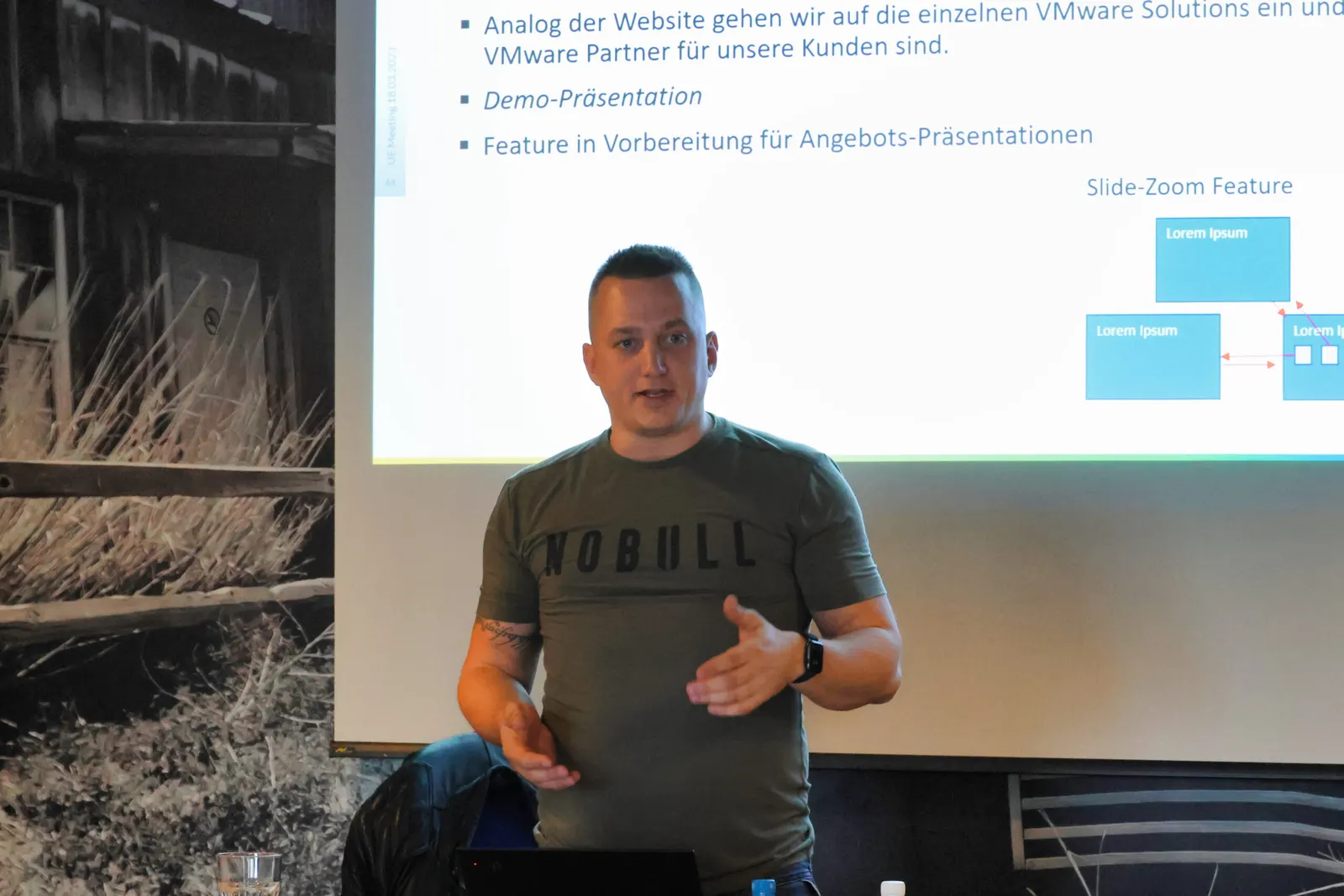
Presenting to a room from a slide deck

Why this is not a technology question

How people want to consume a service today, and the speed at which departments need to get to market, feed straight back into how the IT department is staffed and organised. A strategy that only describes technology answers half the question.

What we work out together

The future operating model: who delivers what, what gets bought in, which capabilities have to exist internally and which do not. That is the decision the architecture follows from, rather than the other way round.

The questions it answers are always the same six:

  • Which tasks should IT take on?
  • How does the innovation process run with the business units?
  • Which services are provided in house and which are bought in?
  • Which work do you do yourselves, and where do you work with partners?
  • How should the IT department be set up in future?
  • Which skills does it take to do the new work?

The last question decides about jobs and is often left out of strategy papers.

How it runs

In workshops with you and your team. We do not write the strategy from outside, because we need to know your processes and responsibilities to write it at all.

Two decisions always come up: whether IT runs the infrastructure itself or buys it as a service, and where a service is delivered. Both answers affect the roles and the development of the people, and we plan for that.


Experts for this

Maybe you? Take a look at our open roles.

You might also like